

About Emergency Management (EM)
The mission of Emergency Management is to build, sustain and improve our community’s capability to mitigate against, prepare for, respond to and recover from threatened or actual disasters, whether natural or man-made and acts of terrorism. We accomplish this by working with our partner agencies and organizations.
The City’s emergency preparedness planning efforts focus on all hazards: weather-related disasters, terrorism, and disease outbreaks. Emergency preparedness requires strong partnerships with other local, state and federal agencies.
While these partnerships are essential to ensuring that we have the resources we need to handle such an emergency, it is important to realize that all of us play a part in being prepared and vigilant.
General emergency preparedness tips
Prepare yourself and family for when disaster strikes:
- Have emergency kits for both your home and vehicle
- Know your emergency contact information
- Make emergency plans such as fire escape routes or tornado shelter
- Know at least 2 ways out of your neighborhood, work location, and other frequently visited places
- Save important documents in a portable device with redundancies
- You can also store documents, photos, video tours of your house highlighting your possessions, pictures of serial numbers, and other important items in a secure “cloud” storage service, many of which are low to no cost
Family Preparedness Tips
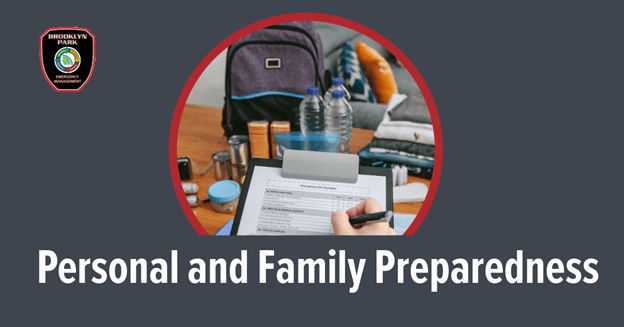
Be ready any time, any day. Emergencies can happen when we least expect them! From power outages and severe weather to situations that require you to leave home quickly.
The Minnesota Emergency Readiness Education & Training (MERET) has put together seven key steps to becoming prepared for emergencies.
Step 1: Create your family emergency plan
Start by making sure everyone in your household knows how to contact each other and where to meet if an emergency happens.
- Fill out a Family Emergency Communications Plan with phone numbers, email addresses, and meeting places.
- Make contact cards for every family member to keep in their wallet, backpack, or phone case.
- Having this plan ready helps reduce stress and confusion when it matters most.
Step 2: Know what you use every day
Preparedness starts with understanding your daily routine. Think about everything you use from morning to night. Consider what food, medicine, devices, and other supplies you consume or use.
- Keep a short log of your daily activities and the supplies you use.
- This helps you identify what you personally need to stay comfortable during an emergency.
- When you know what’s essential, you can plan for it.
Step 3: Build your master supply list
Once you know what you need, it’s time to organize your supplies.
- Start with a Master Emergency Supply Checklist that includes basic items like food, water, flashlights, and batteries.
- Add the personal items you identified from your daily log.
- This list helps you see what you already have and what you still need to get.
- Here is an example Master Emergency Supply Checklist to get you started.
Step 4: Gather your home supplies
Now that your checklist is ready, start collecting your supplies. Aim to have enough essentials to last your household for at least two weeks at home.
- Include food, water, first aid items, and important documents.
- Don’t forget your pets, infants, and anyone with special medical needs.
- A well-stocked supply gives you peace of mind and keeps you safe if you need to stay put.
- Consider keeping a radio, lightsticks, and flares on-hand and learn how they can help keep you prepared.
Step 5: Pack a Go Kit
Some emergencies might mean leaving home quickly. A Go Kit makes that easier.
- Pack enough supplies for three days away from home.
- Use a sturdy backpack or plastic bin that’s easy to carry.
- Include water, snacks, clothes, chargers, medications, and copies of important papers.
- Keep your Go Kit somewhere easy to grab in a hurry.
Step 6: Keep a Car Kit ready
Emergencies can also happen while you’re on the road. That’s why it’s smart to have a Car Kit packed and ready year-round.
- Store it in your trunk or backseat in a backpack or plastic container.
- Include items like a blanket, flashlight, snacks, jumper cables, first aid, and a water supply.
- Having these items on hand can make a big difference if you get stranded or stuck in bad weather.
Step 7: Keep your supplies fresh
Preparedness isn’t a one-time task, it’s something to keep up with over time.
- Check your supplies regularly for expiration dates.
- Rotate food, batteries, and medications to keep everything up to date.
- Use an Emergency Supply Tracking Form to stay organized.
- Taking a few minutes each season to refresh your supplies helps you stay ready for anything.
Get started on your Personal and Family Preparedness Plan!
Now that you know the steps, start your Personal and Family Preparedness Plan today!
More resources
Learn more about Emergency Management and find tips from these local, state and federal resources:
- Hennepin County Emergency Management
- Homeland Security and Emergency Management (State)
- Federal Emergency Management Agency (FEMA)
Language accessibility (TPT Echo)
TPT Echo is a service that provides multilingual health, safety and emergency readiness resources. Find high-quality videos and messaging in Spanish, Hmong Somali, Vietnamese, Lao, and Khmer.